


Buying the best energy efficiency rating appliances for your home is an investment, that will pay you back in dividends. High efficiency rating products, will not only help you to reduce your energy consumption but it will also help you to reduce your carbon foot print. Utilising the information your EPC provides, can help you make the right economical choices.
Energy Efficiency Rating Appliances
Energy efficiency has moved from being a “nice-to-have” to an absolute necessity for modern households. With energy prices rising and environmental concerns becoming impossible to ignore, energy efficiency rating appliances now play a critical role in how much we spend, how we live, and how sustainable our homes truly are. Choosing the right appliance is no longer just about brand or price, it’s about long-term value, measurable savings, and smarter energy use.
This guide breaks down exactly what energy efficiency rating appliances mean, how much money they can save you, and why tools like an Energy Performance Certificate (EPC) are worth their weight in gold when making informed purchasing decisions.
What Are Energy Efficiency Rating Appliances?
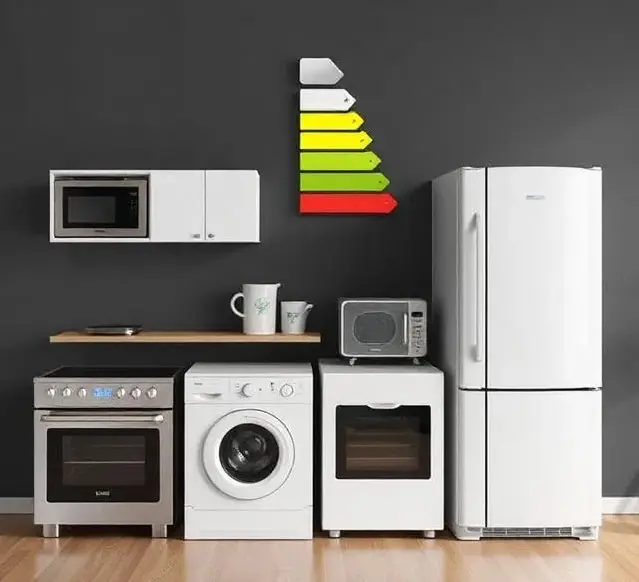
Energy efficiency rating appliances are household products graded according to how effectively they use energy to perform their function. These ratings are displayed on standardized energy labels, most commonly used across Europe, giving consumers a clear and trustworthy comparison between appliances.
Under the current energy labelling system, appliances are rated from A (most efficient) to G (least efficient). Older labels previously used A+, A++, and A+++ ratings, but these have now been rescaled to improve clarity and future-proof the system. Regardless of the scale, the principle remains the same: the higher the rating, the lower the energy consumption.
Understanding these labels allows homeowners to look beyond upfront cost and evaluate an appliance based on its true lifetime running cost.
How Energy Efficiency Rating Appliances Actually Save You Money
The financial case for energy efficiency rating appliances is where the real authority lies, and where many buyers underestimate the impact.
A higher-rated appliance uses less electricity to deliver the same (or better) performance. Over time, this adds up to substantial savings:
- A high-efficiency refrigerator can save hundreds of pounds over its lifespan compared to a low-rated model.
- Energy-efficient washing machines use less electricity and less water, reducing both utility bills simultaneously.
- Modern high-rated dishwashers often cost pennies per cycle when compared to older, inefficient alternatives.
When viewed over 10–15 years of use, the difference between low-rated and high-rated appliances isn’t marginal, it’s significant.
Energy Efficiency Rating Appliances and Environmental Impact
While cost savings grab attention, the environmental benefits of energy efficiency rating appliances are equally compelling.
Lower energy consumption means:
- Reduced demand on power stations.
- Fewer fossil fuels burned.
- Lower greenhouse gas emissions.
By choosing high-efficiency appliances, households actively reduce their carbon footprint without sacrificing comfort or convenience. It’s one of the simplest ways to make sustainable living practical rather than aspirational.
Why Energy Efficiency Rating Appliances Outperform Older Models
A common misconception is that energy-efficient appliances compromise on performance. In reality, the opposite is true.
Modern energy efficiency rating appliances are designed with advanced technology that improves results while cutting waste. Examples include:
- Inverter motors that adjust power usage dynamically.
- Smart sensors that optimise water and energy use.
- Eco-modes that deliver excellent performance at lower consumption levels.
Higher efficiency often goes hand-in-hand with greater durability, meaning fewer replacements and even more long-term savings.
Energy Efficiency Rating Appliances and Government Incentives
Many governments actively encourage the purchase of energy efficiency rating appliances through grants, rebates, and tax incentives. These schemes are designed to reduce the upfront cost barrier and accelerate the transition to more sustainable homes.
While incentives vary by region, they often include:
- Cashback offers on high-rated appliances.
- Reduced VAT or tax credits.
- Local authority or energy supplier grants.
When combined with long-term bill savings, these incentives make energy-efficient appliances one of the smartest financial decisions a homeowner can make.
Choosing Energy Efficiency Rating Appliances for Your Home
Selecting the right energy efficiency rating appliances requires a balance of efficiency, size, usage patterns, and budget.

Consider Long-Term Savings Over Purchase Price
Higher-rated appliances may cost more upfront, but their reduced running costs often mean they pay for themselves over time. Looking at estimated annual energy consumption on the label provides a realistic view of future savings.
Match the Appliance to Your Household Needs
An appliance that’s too large or too small for your household can waste energy regardless of its rating. Choose capacity and features that align with your actual usage.
Trust Proven Brands and Real-World Reviews
Manufacturers such as Bosch, LG, and Samsung consistently lead the market in energy efficiency rating appliances, combining innovation with reliability. Customer reviews can also reveal how well an appliance performs outside laboratory conditions.
Who Energy Efficiency Rating Appliances Matter Most To
Energy Efficiency Rating Appliances for Landlords
For landlords, energy efficiency rating appliances are no longer optional extras, they are a strategic necessity. High-efficiency appliances help reduce tenant energy bills, improve EPC scores, and support compliance with minimum energy efficiency standards. Properties with efficient appliances are easier to let, suffer fewer void periods, and are far more resilient to future regulatory changes.
An EPC clearly shows how appliance upgrades can improve a property’s rating, helping landlords prioritise improvements that deliver both compliance and return on investment.
Energy Efficiency Rating Appliances for Homeowners Looking to Sell
For sellers, energy efficiency rating appliances can directly influence buyer confidence and property value. Buyers increasingly want clarity on running costs, not just aesthetics.
A strong EPC, supported by high-rated appliances, allows sellers to demonstrate:
- Lower monthly energy bills.
- Reduced heating and electricity costs.
- A future-ready, efficient home.
This transparency shortens decision cycles and positions the property as a smarter long-term purchase.
Energy Efficiency Rating Appliances for Buyers
Buyers want answers to one critical question: How much will this home cost to run?
Energy efficiency rating appliances, when assessed alongside an EPC, provide those answers. Together they offer realistic insight into heating costs, electricity usage, and future upgrade potential, before contracts are exchanged.
For buyers, this knowledge is power. It turns uncertainty into confidence and protects against unexpected energy costs after moving in.
The Role of EPCs in Evaluating Energy Efficiency Rating Appliances
This is where the conversation gets serious.
An Energy Performance Certificate (EPC) provides a holistic view of how energy is used within a property. While appliance labels show individual efficiency, EPCs reveal how those appliances fit into the wider energy profile of the home.
When used together, energy efficiency rating appliances and EPCs become a powerful decision-making tool:
- EPCs highlight where energy losses occur.
- They show how appliance upgrades impact overall efficiency.
- They help homeowners prioritise changes with the biggest financial return.
In short, an EPC turns energy efficiency from guesswork into strategy, showing landlords, sellers, and buyers exactly how energy efficiency rating appliances impact the true cost of running and heating a property.
Why EPCs Are Worth Their Weight in Gold
For homeowners, landlords, and buyers alike, EPCs provide clarity, credibility, and confidence. When combined with high-rated appliances, an EPC can:
- Increase property value.
- Improve rental appeal.
- Reduce running costs dramatically.
- Demonstrate compliance with energy regulations.
An EPC doesn’t just tell you how efficient your home is, it shows you how to make it better, and where energy efficiency rating appliances deliver the strongest return on investment.
The Future of Energy Efficiency Rating
Consumer demand for efficient appliances continues to grow, driven by rising energy costs, smarter technology, and stronger environmental awareness. High efficiency is no longer a niche preference, it’s the new standard.
Homes equipped with top-tier energy efficiency rating appliances, supported by a strong EPC, are better prepared for future regulations, energy price fluctuations, and sustainability targets.
Final Thoughts on Energy Efficiency Rating Appliances
Investing in energy efficiency rating appliances is one of the most practical, measurable, and impactful decisions a homeowner can make. The savings are real, the environmental benefits are undeniable, and the long-term value is unmatched.
When paired with a clear EPC, these appliances don’t just reduce bills, they transform how efficiently a home operates. That’s why, in today’s energy-conscious world, understanding and acting on energy efficiency isn’t optional, it’s essential. In need of an EPC, book yours here.
East Midlands Property Compliance.

Leave a Reply